

Recycle Helper
Addressing the data gap in the circular economy
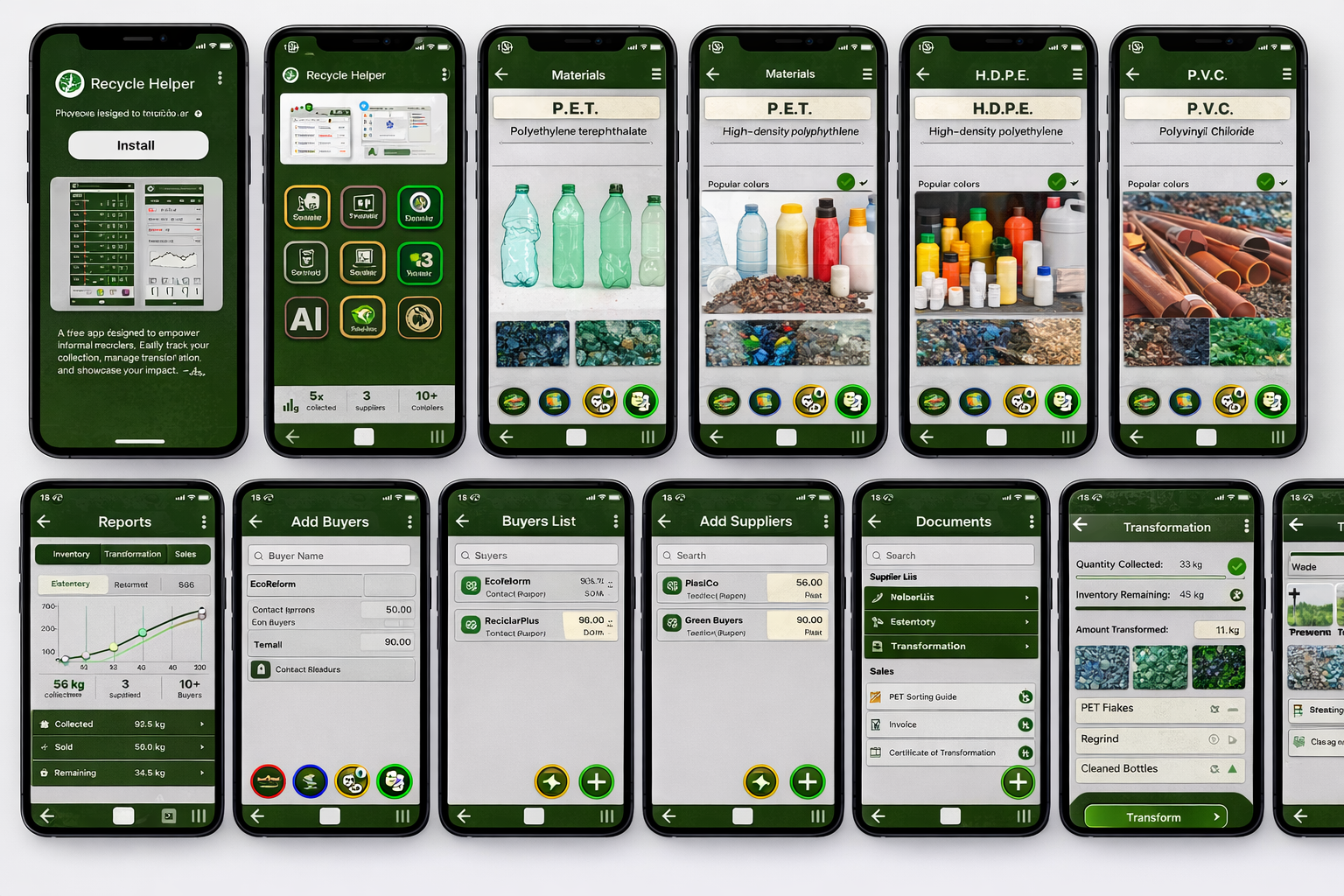
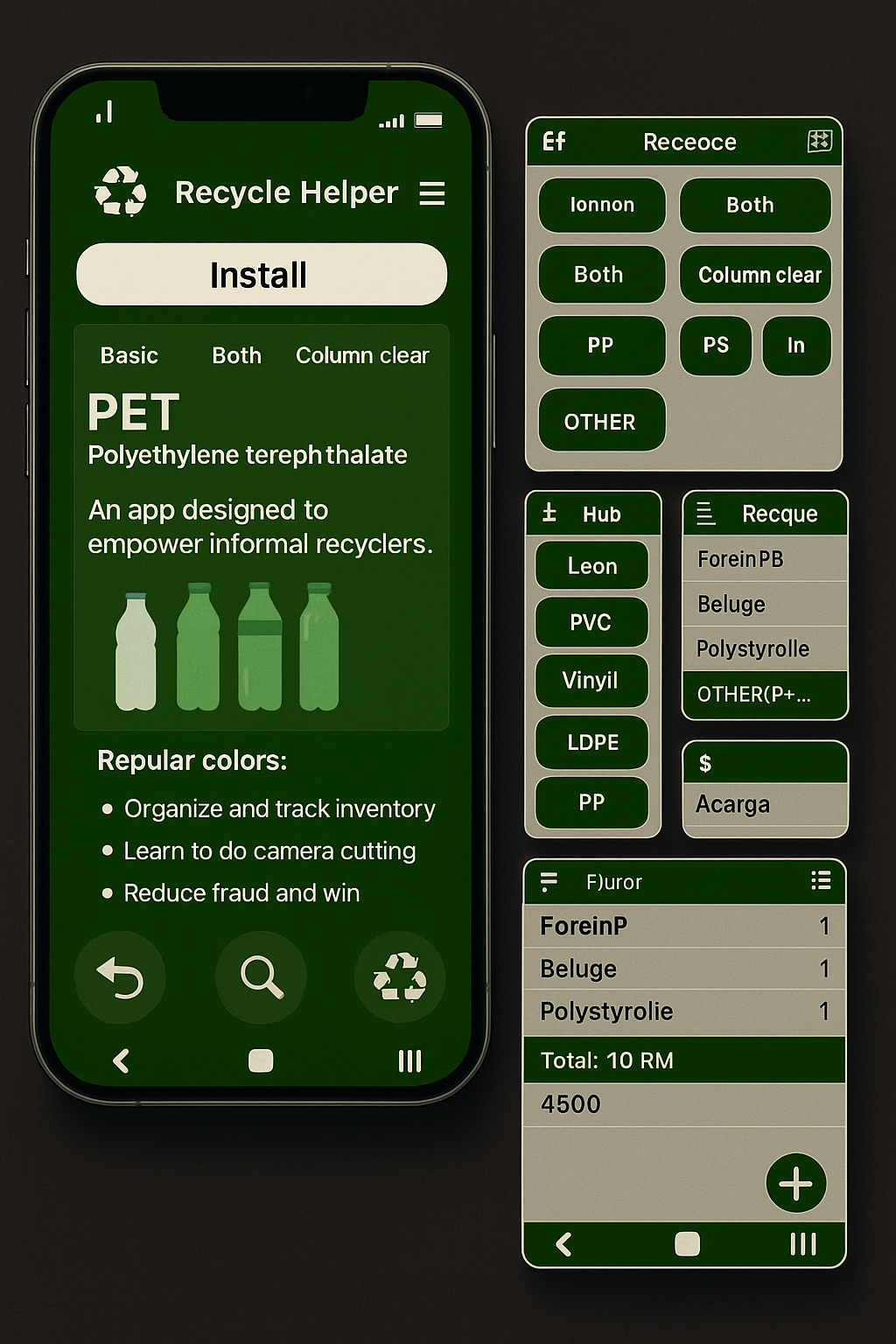
A free, purpose-driven app designed to support small recyclers in underserved communities.
Much of today’s recycling research and policy work—led by organizations such as Reloop—operates at a national, corporate, or policy level. These efforts provide essential insights into recycling rates, packaging flows, and system performance at scale.
However, during early research, a critical gap became clear: the day-to-day realities of small and informal recyclers are largely absent from existing datasets.
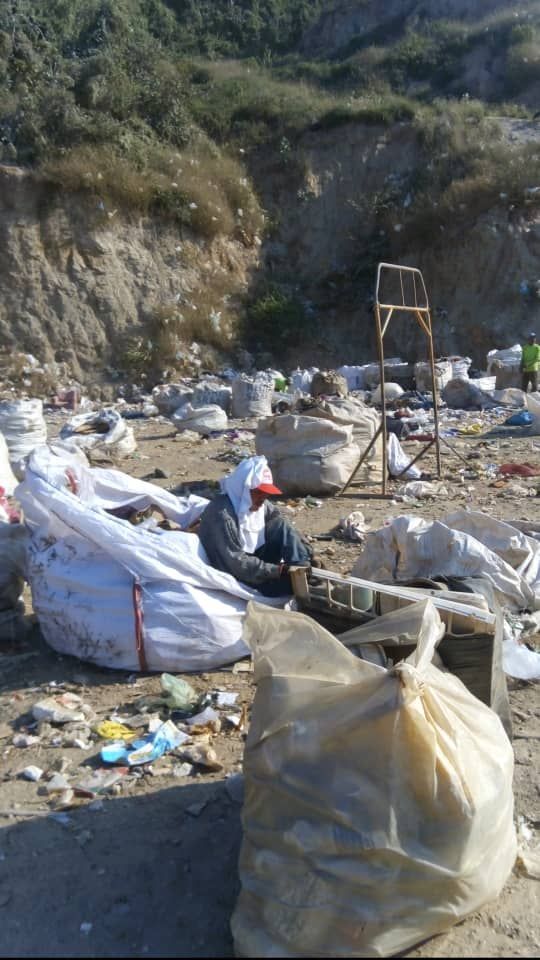
These recyclers operate at the front lines of the circular economy, collecting, sorting, and transforming materials in communities where formal recycling programs are limited or nonexistent. Yet their work, challenges, and impact are rarely captured in official reporting.
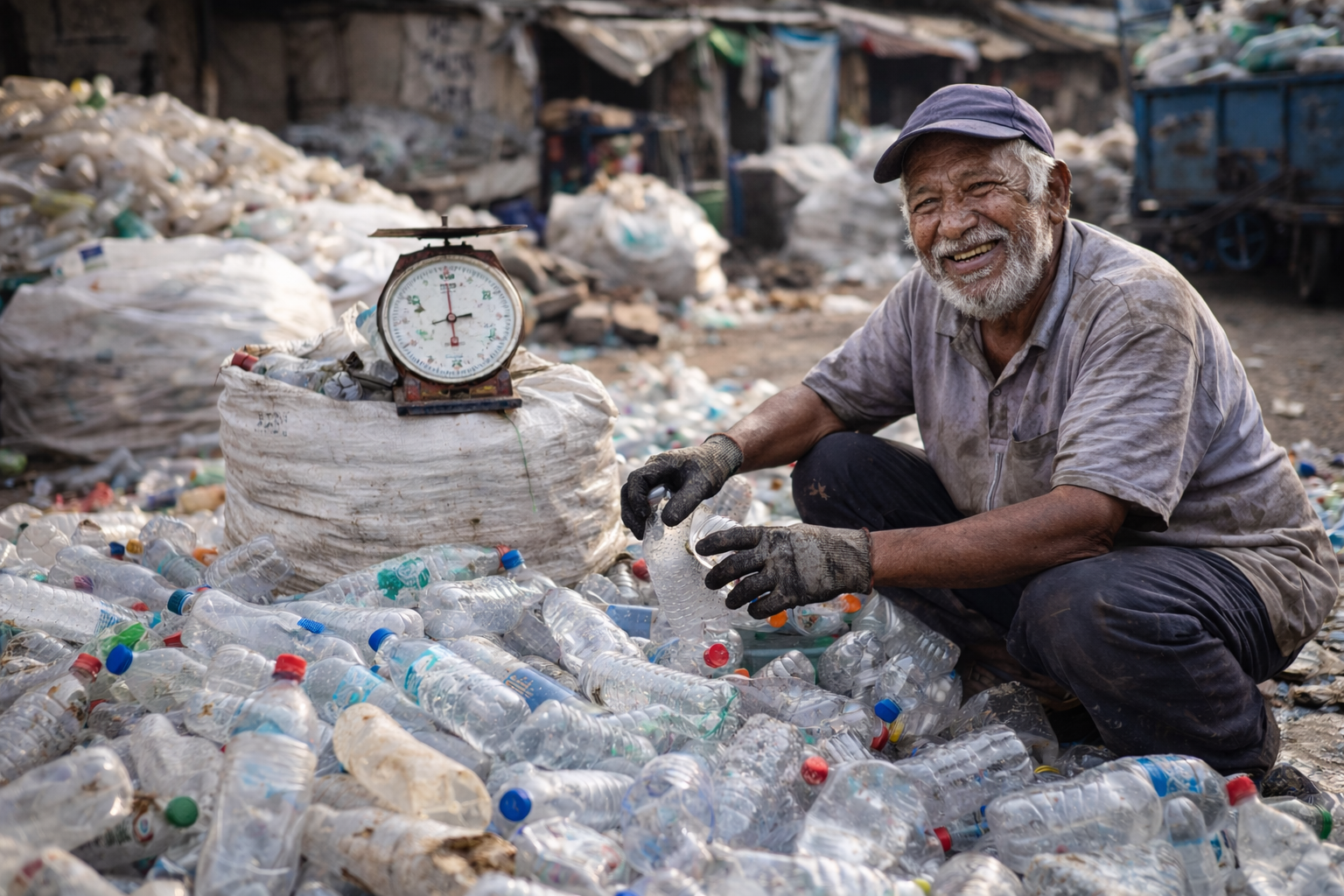
The Missing Layer
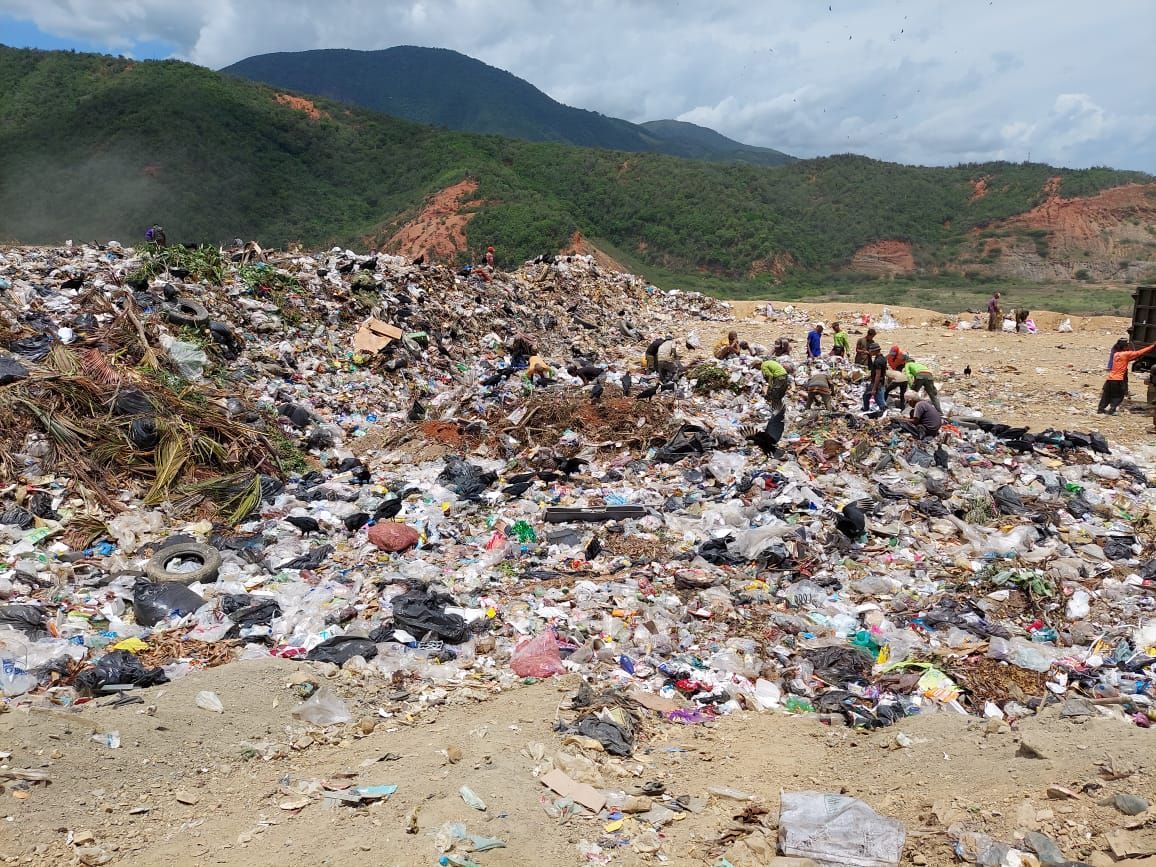
While macro-level data explains what is happening at a national or corporate scale, it often fails to capture:
- What materials are actually being collected on the ground
- Contamination levels in underserved areas
- Informal recycling networks and community depots
- Local price fluctuations for recyclable materials
- Gaps in municipal infrastructure and collection
This project was inspired by the need to surface this
ground-level reality—not to replace existing research, but to complement it with data and insights from communities that are typically invisible.
A Bottom-Up Approach
Rather than building tools for institutions, this app was intentionally designed for the people who directly handle recyclable materials.
The approach prioritizes:
- Simplicity over complexity
- Support over bureaucracy
- Visibility over abstraction
By equipping small recyclers with an accessible, free tool, the project aims to strengthen their ability to document their work, organize operations, and demonstrate environmental and social impact—while also contributing valuable insights to the broader recycling ecosystem.
Why This Matters
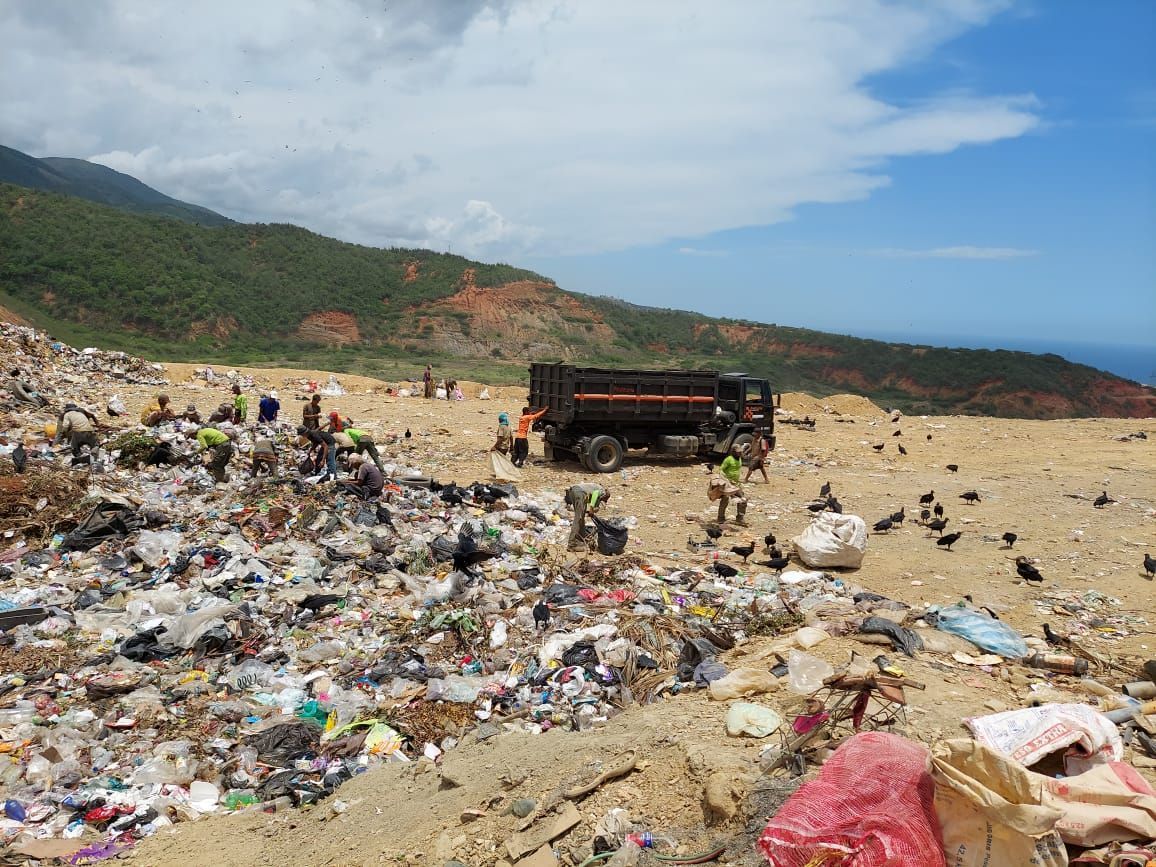
Reliable, community-level data is essential for effective policy, funding decisions, and infrastructure planning. By empowering recyclers to capture and share their own data, the app helps bridge the gap between
macro-level policy insights and
micro-level lived experience.
In this way, the project positions small recyclers not just as beneficiaries of the circular economy, but as
active contributors to the knowledge that shapes it.
Photo gallery